


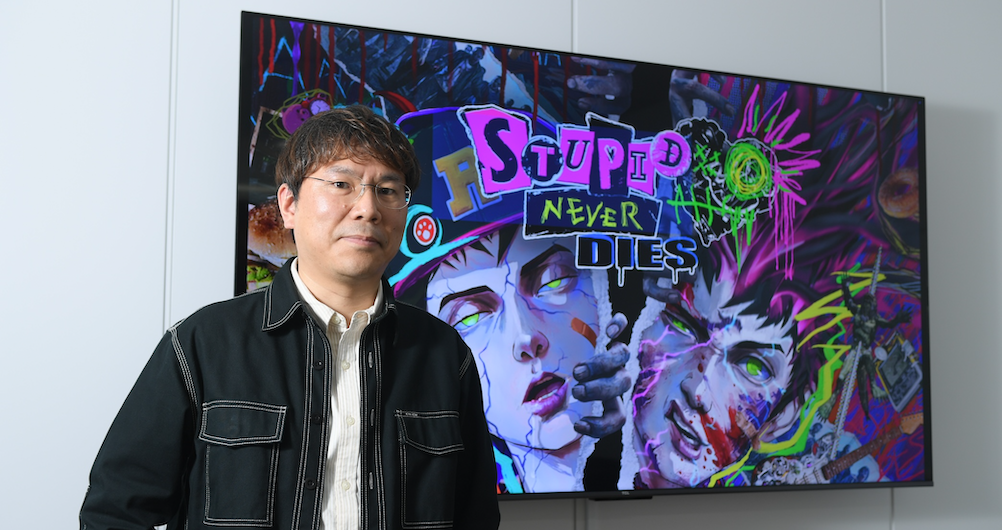
*** From an article published in Weekly Famitsu (April 30 issue). ***
A closer look at this action RPG packed with unique gameplay
We spoke with Hiroyuki Kobayashi—known for his work on Resident Evil, Devil May Cry, and Dragon’s Dogma. From the story of Davy and Julia to the details of the game’s unique combat system, we covered a wide range of topics.
The birth of Davy and Julia, and how they meet
— When the game was revealed at The Game Awards 2025 last December, the music video-style trailer drew a lot of attention. We’ve heard that Julia, in particular, became very popular—how was she created?
Kobayashi:
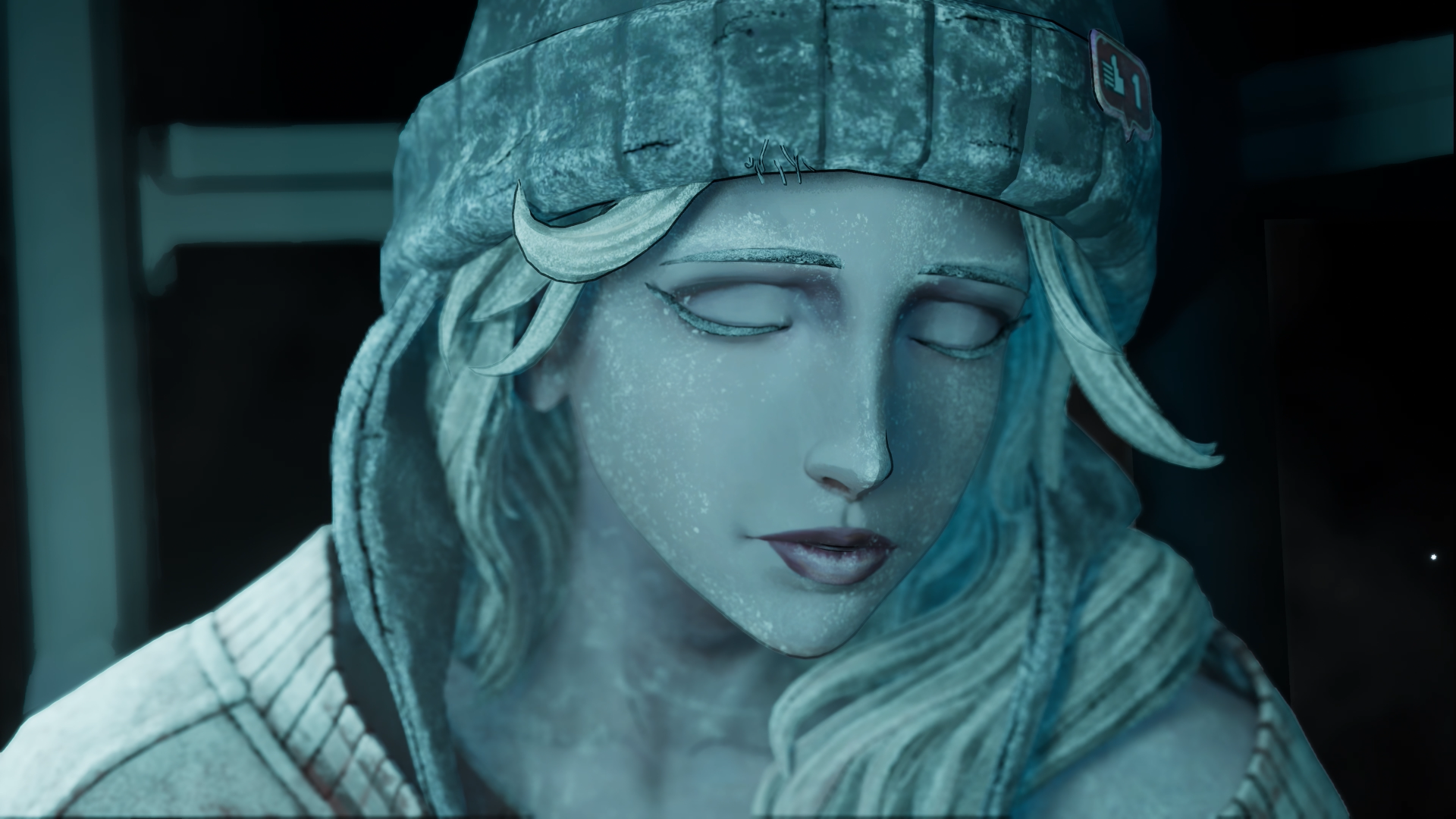
Julia was actually the character we struggled with the most. We redid her design once, created several outfit variations, and experimented with a wide range of hairstyles—from short to long. We were very conscious of creating a heroine that would be accepted globally, not just in Asia. So we were truly happy to see her gain attention after the TGA reveal.
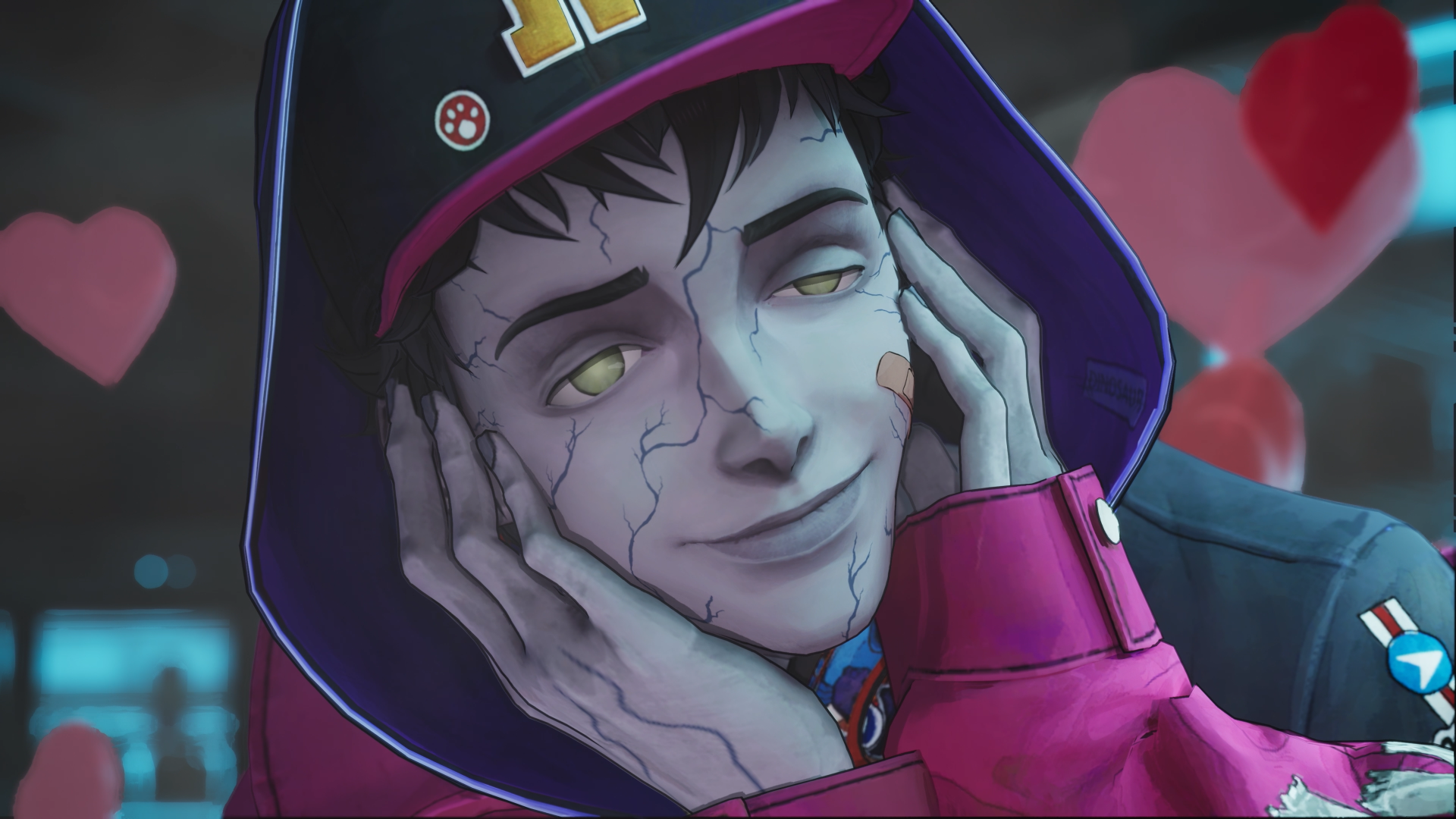
As for Davy, the only thing that took time to finalize was his face. We had already established his height and build relatively early on, and his fashion also came together fairly smoothly. But it took time until we found a face that felt “just right.”
— Could you tell us about how Davy and Julia meet?
Kobayashi:
Julia is a college student who, while being chased by monsters, takes refuge in a shopping mall—but ends up dying inside a freezer. Later, Davy, who is wandering around looking for food, finds her and falls in love at first sight.
The turning point for Davy—who is a rather weak zombie—is an “egg” that was being researched by Dr. Frank. Davy ends up stealing and eating it, gaining special abilities as a result. The doctor then tells him, “Go defeat the KOM (King of Monsters) to save the world. If you do, the Over-Technology it possesses might be able to bring Julia back to life.”
However, Davy’s motivation for fighting is simply to bring Julia back to life.



What is the Style Eat system?
— Could you tell us more about the 11 Style changes, which are the game’s biggest feature?
Kobayashi:
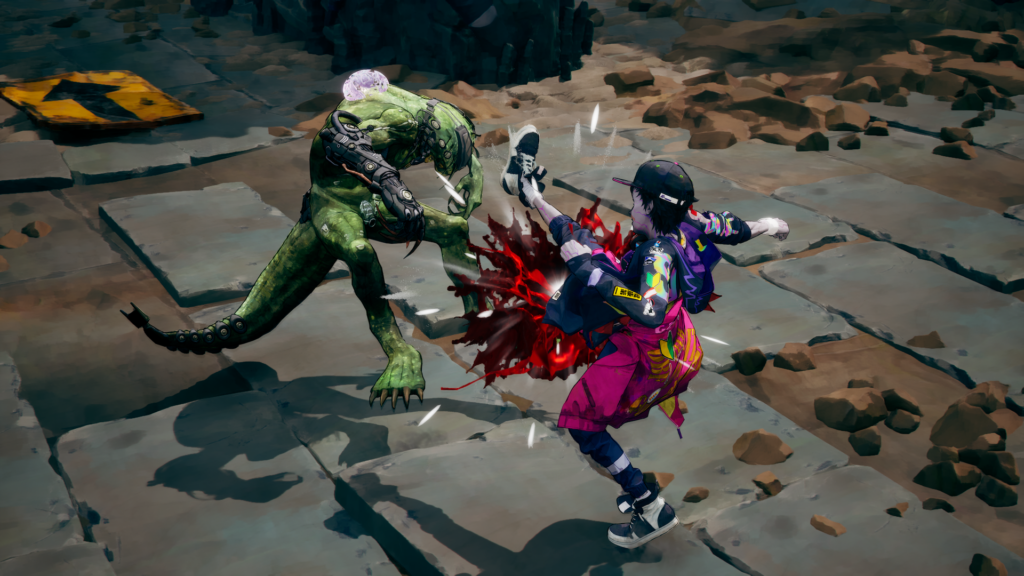
You start with the Zombie Style, and by consuming the cores of “elite monsters” that appear in dungeons, your form changes and you gain their abilities.
The key point is that you don’t obtain fixed skills directly from the monsters. Each Style has five possible skills, and you gain one at random. So even if you consume a Werewolf core, you may get a different skill than before.
There is also a rarity system, where higher rarity increases base stats such as attack power.
When acquiring a Style, a “Style Card” is displayed, allowing you to check the details of the skills before obtaining it. You can also compare it with your current skills, and if you don’t want it, you can choose not to acquire it. There is a lot of enjoyment in selecting skills strategically, considering compatibility with your current Styles and the enemies you want to defeat.
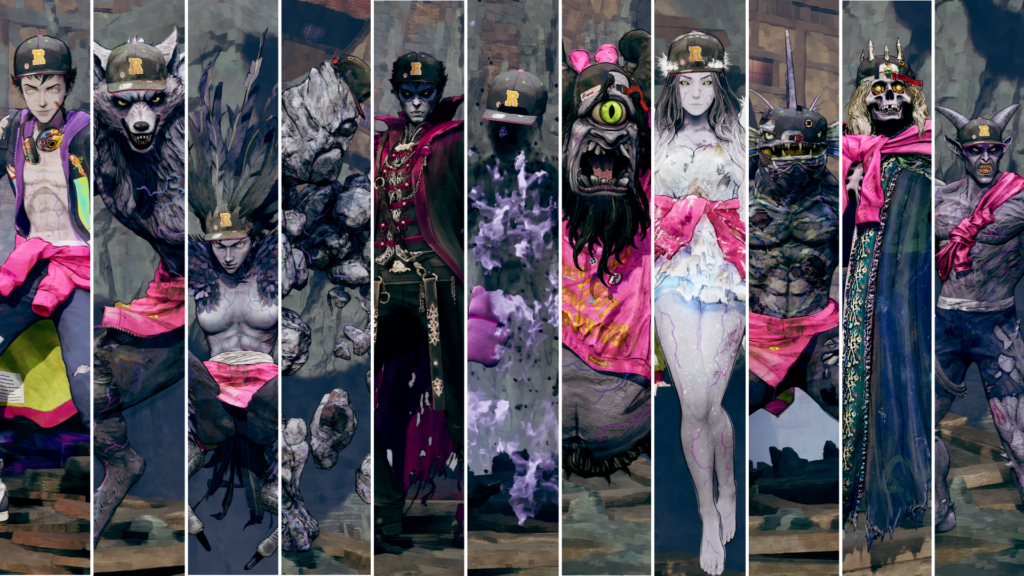
- Zombie Style: The base Style
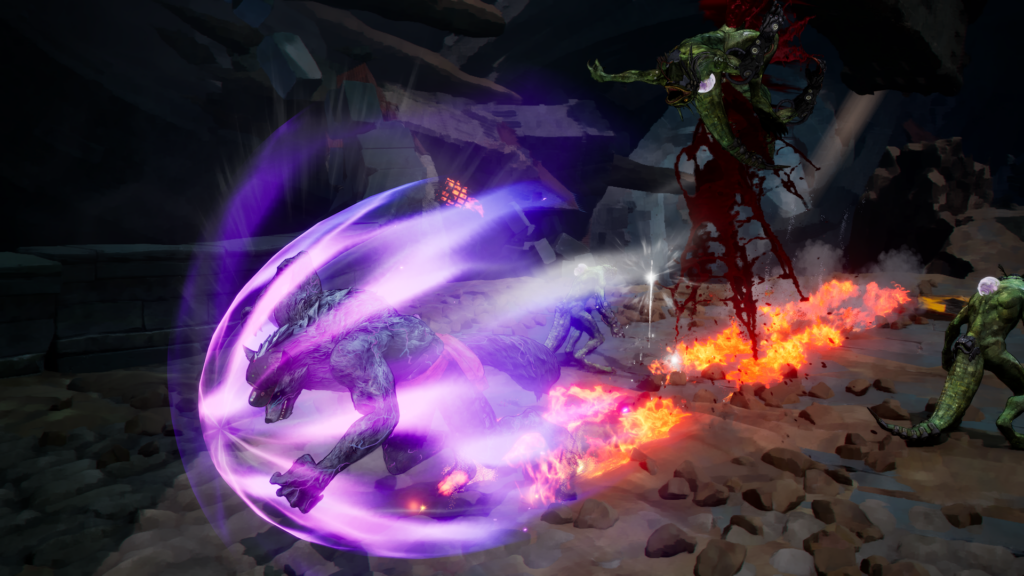
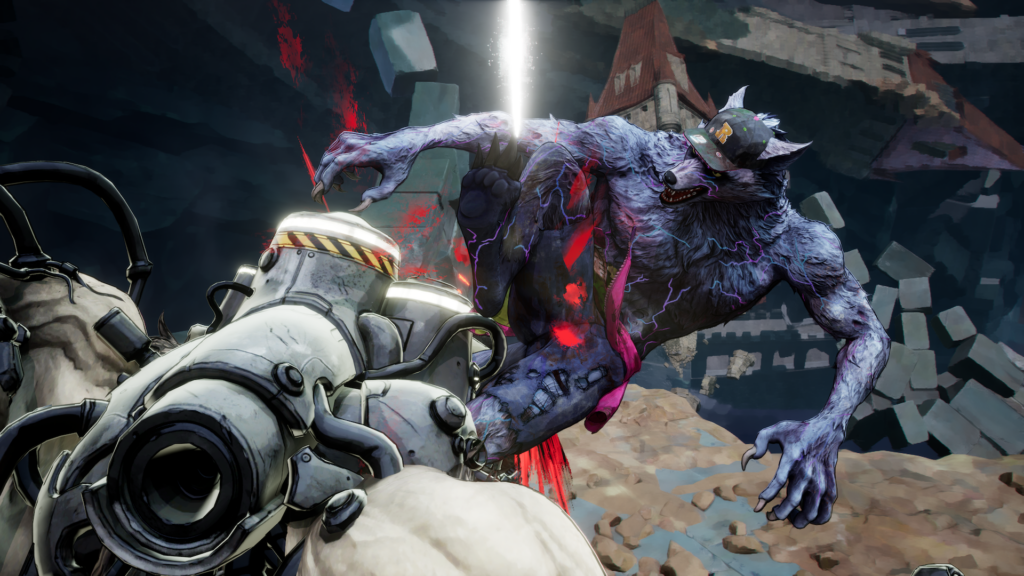
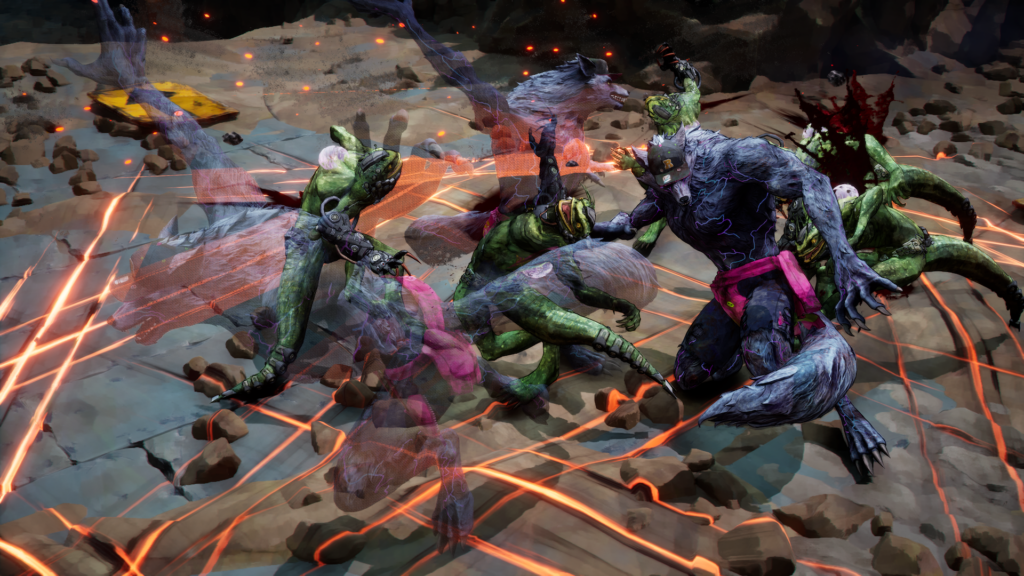
- Werewolf Style: Fast movement and attacks
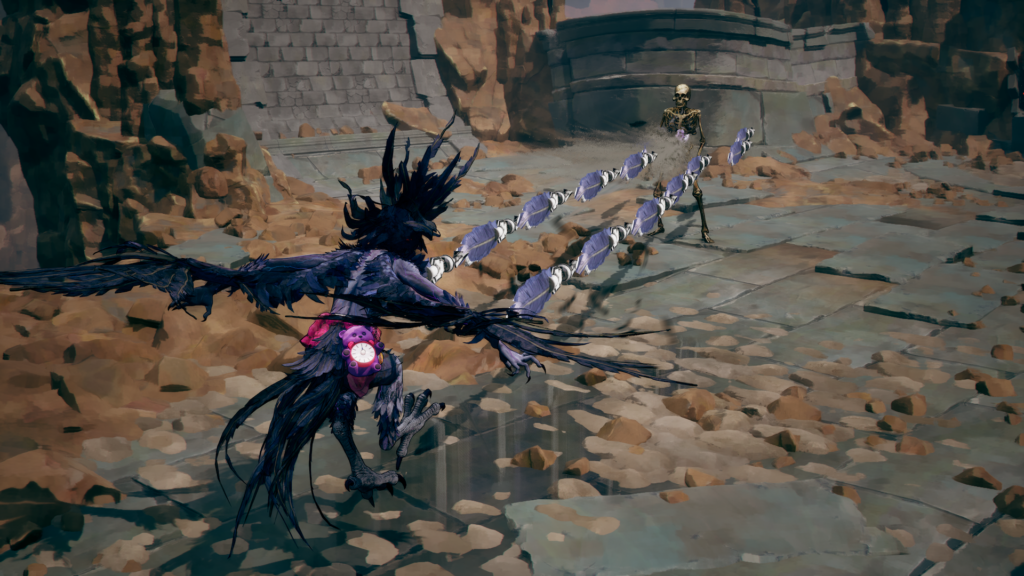
- Harpy Style: Enables ranged attacks from the air
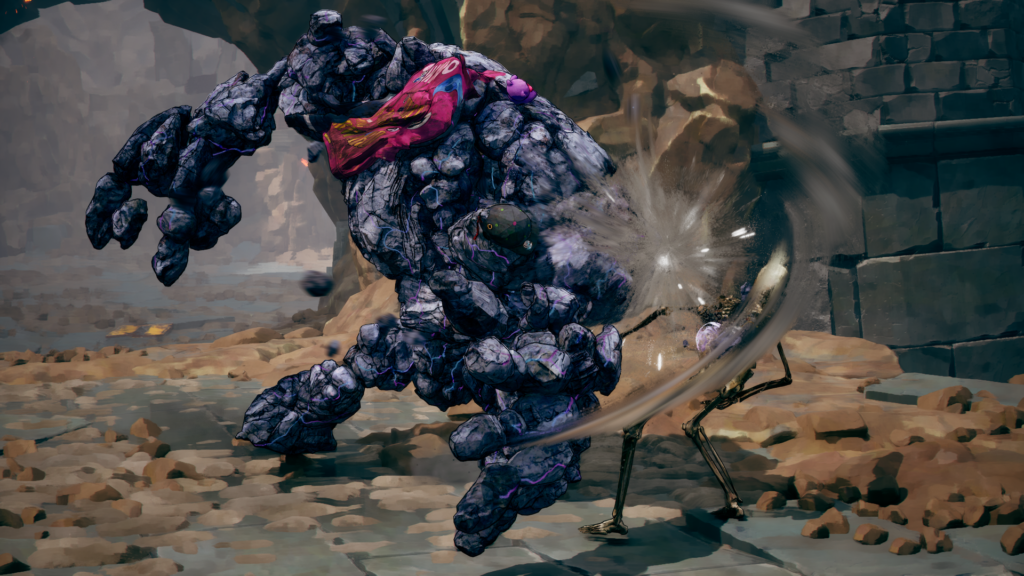
- Golem Style: Powerful enough to blow away groups; hard to stagger
- Vampire Style: Commands a swarm of bats
- Will-o’-the-Wisp Style: Can shift between spirit and physical form
- Cyclops Style: A single-hit powerhouse wielding a massive club
- Snow Fairy Style: Freezes enemies and converts them into power
- Merfolk Style: Can move underground to attack
- Lich Style: Attacks with a scythe and commands skeletons
- Demon Style: Manipulates whips and gravity to control enemy positioning
— What are the characteristics of the 10 elite monsters?
Kobayashi:
They differ in attack range—close, mid, and long—and each has its own strengths. Golem and Cyclops are power types, focusing on heavy attacks. Harpy can fly, and Werewolf is very fast.
There is no one Style that works for everything. Instead, we designed it so that certain Styles are stronger against certain enemies. In fact, there are even situations where the Zombie Style is the most suitable (laughs).
In total, we prepared 50 skills—five for each of the 10 Styles. These were created through extensive idea exchanges among the development team.
— Can players combine different Styles to create combo-like attacks?
Kobayashi:
Yes. You can switch between Styles instantly with a single button. For example, you could fly above an enemy using the Harpy Style, then switch to the Golem Style and perform a body press.
You can also change Styles in mid-air, and even revert back to Zombie. We hope players will discover their own combinations.
Endless combinations with Body Hack
— Another feature is the Body Hack system, where weapons and equipment are embedded into Davy’s body. Could you tell us more about this?
Kobayashi:
When I first heard the idea, I thought Body Hack would only work in Zombie form. However, the director told me, “You can equip gear even when switching to other Styles.”
Even after changing Styles, the equipment continues to function—but this made development quite challenging. For example, Zombie and Werewolf have completely different body sizes. Even if you equip gear to the same part, the arm size differs depending on the Style, so we had to adjust the visuals for all 11 Styles.
Both the modeling and animation teams worked very hard to make this happen.
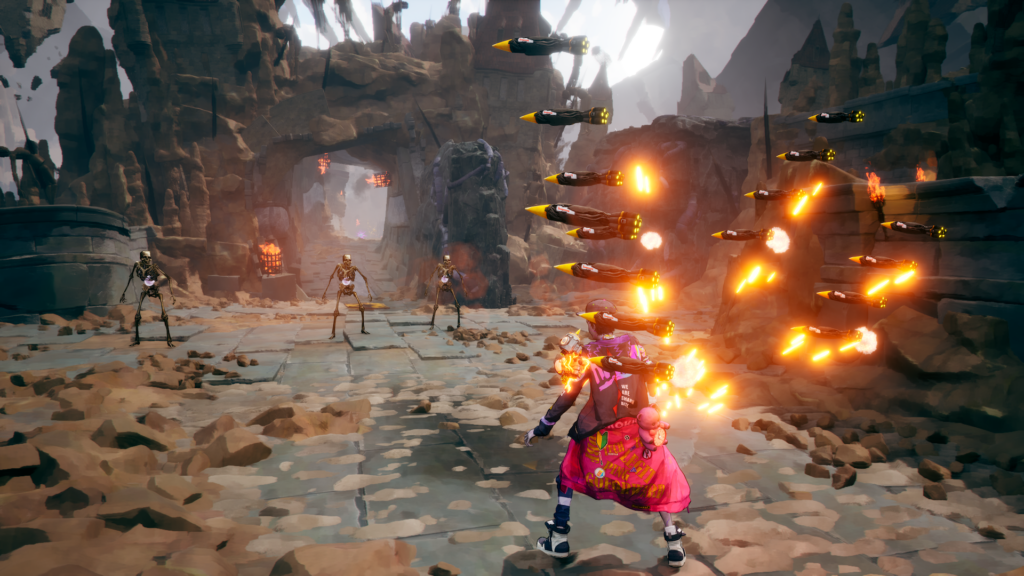
There are many types of Over-Technology equipment, ranging from close-range and long-range offensive gear to tools used for escaping areas. The combination of Styles and equipment creates a wide range of possibilities.
Equipment can be set at the shopping mall, which serves as the starting point, before heading into the dungeon. There are also RPG-like elements where you collect parts and strengthen your gear.
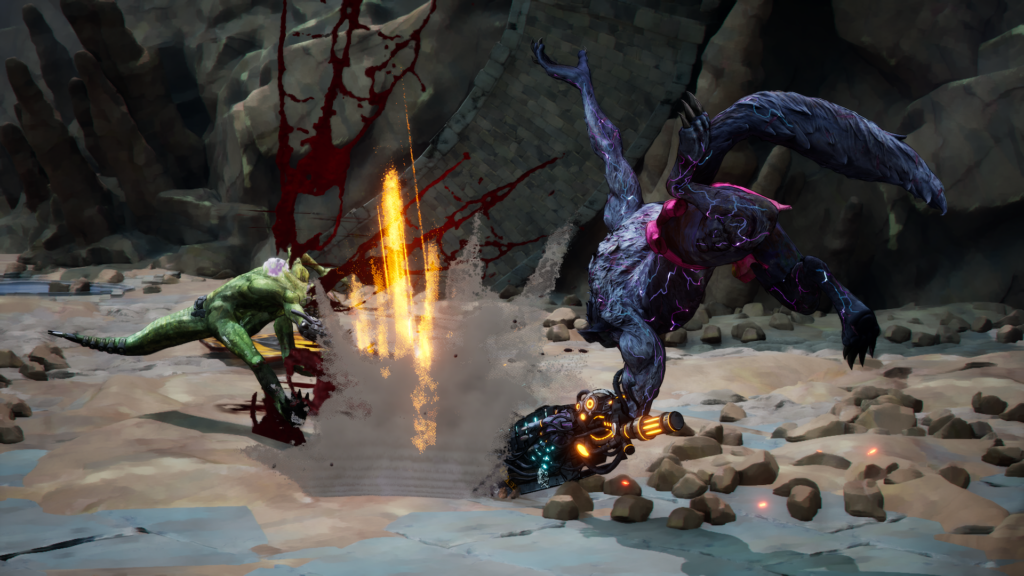
— Could you also tell us about Davy Burst, with its flashy disco-style effects?
Kobayashi:
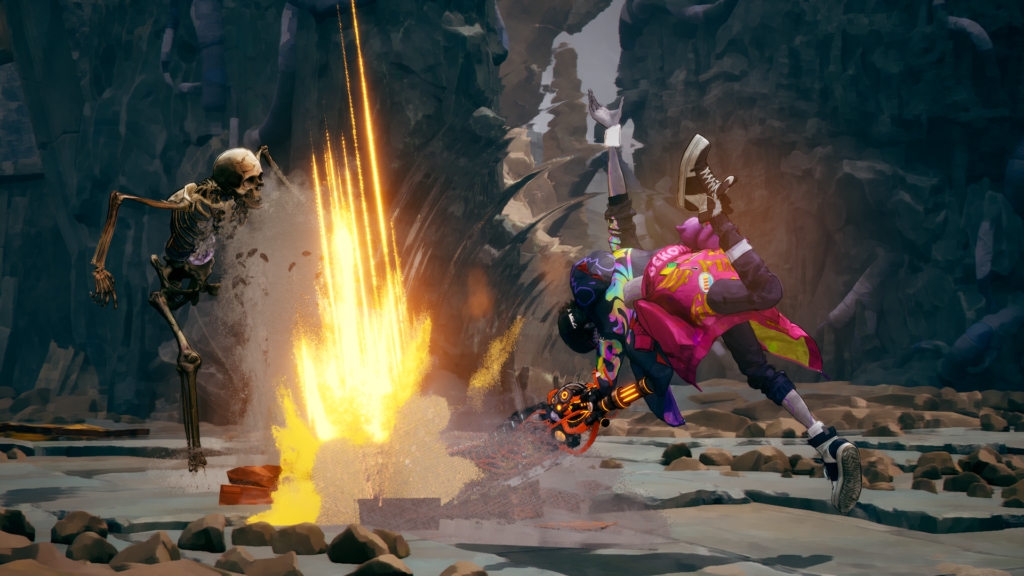
An internal gauge fills under certain conditions, and once it’s full, Davy Burst can be activated with a button press. The activation button appears on-screen when it’s ready.
When activated, attack and defense increase, and to express that “amped-up” feeling, the visuals shift into disco-style lighting. The ground and enemies transform into graffiti-like visuals drawn by Davy, and the music also changes.
This is meant to represent Davy’s imagination—nothing actually changes from the monsters’ perspective (laughs). However, since your attack and defense are boosted, you can defeat enemies more easily, which creates a strong sense of exhilaration.
30 hours of gameplay volume
— Many players are looking forward to the game. Could you tell us about the current development status?
Kobayashi:
Development is nearing completion, and we are currently in the final stages of tuning and polishing. The game is fully playable from start to finish, and the team continues to play it daily to refine details and improve quality.
Localization is progressing in parallel, and we are aiming for a global simultaneous release with support for 13 languages. Voice acting will be in English, with text available in all supported languages.
The release is planned for sometime after Fall 2026, and the estimated playtime is around 30 hours.
If you enjoy action games, we hope you’ll give it a try. Please look forward to Stupid Never Dies!!